
The People Are Hungry for Learning
On Knowledgemaxxing
Hi Readers,
The trend of “knowledgemaxxing” has “maxxed” out our brainspace since Casey Lewis covered it in After School. A trend about young people craving . . . learning? Swapping doomscrolling for curiosityreading? (As long as we’re making up words.) Even if a portion of the practice is performative, we’re taking this phenomenon as an excuse to try on some optimism for a bit. Brains are back! Has the rot been vanquished? We can only hope.
As publishing people, we knowledgemaxx for a living. There’s always another nonfiction book around the corner, waiting to ambush us with facts both trivial and pivotal.
Performative or not, allow our staff to share some of what we’ve learned lately—and please, share your own recent findings in the comments! No tidbit is too bitty. We’re hungry for it all.
Your Random House Tour Guides

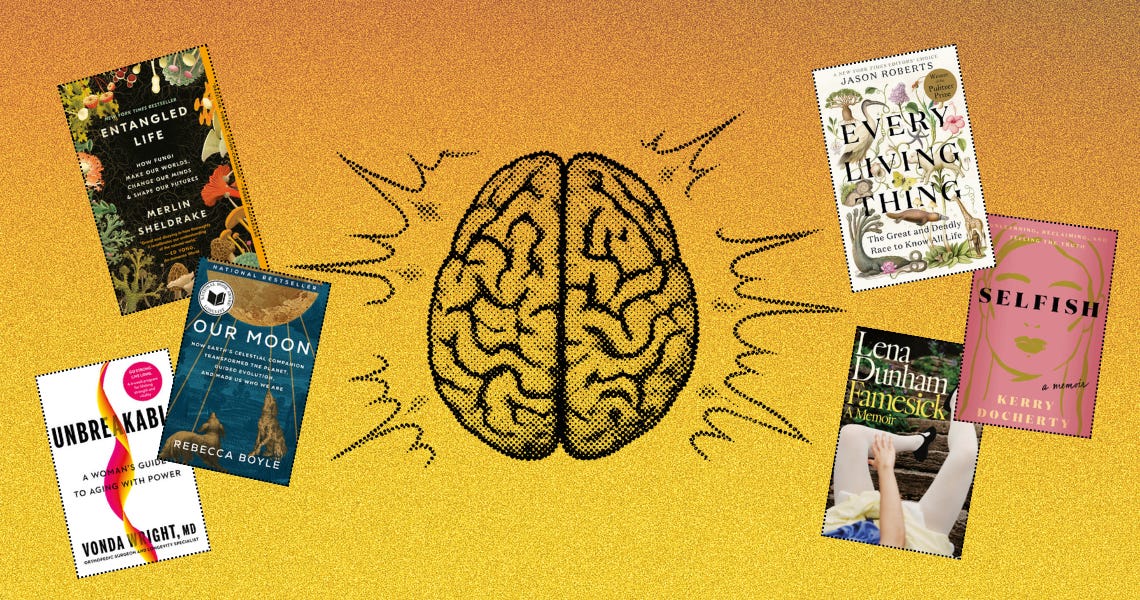
Famesick by Lena Dunham
“The person who paints your walls should not paint your floors, and the person who paints your floors should not paint your walls!”
—Caitlin, Sr. Analyst, Consumer Insights
“Loved the behind the scenes look at Girls (Adam Driver did pushups over her?!) and Lena Dunham’s relationship and breakup with Jenni Konner. I still want to know which pop star lived with her and Jack Antonoff and also the actor who sent her a ‘u up?’ text. Learned that stress can really affect your health, and was fascinated by her time in rehab.”
—Sarah, Marketing Freelancer

The Carb Reset by Harley Pasternak
“I learned about Harley’s PATH acronym as a helpful intuitive guide for nutrition and eating—a Palm of carbohydrates, All the vegetables, Thumb of fat, and a Hand of protein. I feel so full, healthy, and lost 8 lbs.! Plus I can eat pasta, which—who doesn’t love that?”
—Annie, Assistant Marketing Director

Every Living Thing: The Great and Deadly Race to Know All Life by Jason Roberts
“Linnaeus is a hack fraud and my personal enemy. His (deeply flawed!) classification system only gained such prominence because of French Revolution era propaganda—Buffon truthers to the front!!!!”
—Kay, Marketing Assistant

Entangled Life by Merlin Sheldrake
“And speaking of biology and classification systems, did you know that a lichen ‘species’ is not a single plant but rather complex symbiotic hybrid colonies of fungi, bacteria, and algae? In fact, lichen’s mutualistic relationships made us rethink our concept of symbiosis!”
—Kay, Marketing Assistant

Strangers by Belle Burden
“Girl just get the prenup!”
—Madison, Senior Marketing Manager
“I have a note in my Notes app of new-to-me words from books. Two from Strangers: treen: small woodenware; and glassine: a thin, dense, transparent or semitransparent paper highly resistant to the passage of air and grease.”
—Isabella, Associate Director, Creative Copy

Our Moon by Rebecca Boyle
“Since reading Our Moon, I’m fascinated with the concept of time, specifically how it’s different on the moon and other planets. One full day on the moon is the equivalent of roughly 29 Earth days, which means 1 day on the moon is the same as 2 weeks of daylight and 2 weeks of darkness for us.”
—Karen, Executive Publicist (and new Space Enthusiast thanks to Artemis II)

Selfish by Kerry Docherty
“Emotional affairs can cause just as much (if not more) chaos than physical ones!”
—Elizabeth, Associate Marketing Manager

Supercommunicators by Charles Duhigg
“Happy and unhappy couples generally fight about the same issues (money, health problems, etc.); however, what separates happy couples from unhappy couples is they approach control differently.
Happy couples focus on controlling their emotions, environment, and the conflict’s boundaries during arguments, whereas unhappy couples seek to control the other person.”
—Caitlin, Sr. Analyst, Consumer Insights

Unbreakable by Vonda Wright
“Lifting weights matters more than you think!”
—Jessalyn, Sr. Marketing Director
“One big thing the book taught me is: muscle is not a fitness asset; it’s a longevity asset. Most women are taught to think about exercise in terms of weight loss, appearance, fitting into clothes, looking younger. Unbreakable reframes the conversation entirely—it invites us to think, ‘build the body you’ll need for the life you want.’”
—Lulu, Marketing Director

Clam Down by Anelise Chen
“From Anelise Chen, I learned about Deyrolle, the famous Paris taxidermy shop—and that André Breton and Salvador Dalí ‘once believed that the store provided a conduit to the subconscious.’
Also on the topic of Surrealists, I learned about Leonora Carrington, who wrote animal fables and made paintings about ‘young women who armored up for the vicissitudes of society by wearing an animal face.’
You can’t read Clam Down without coming away with hordes and hordes of trivia.”
—Isabella, Associate Director, Creative Copy
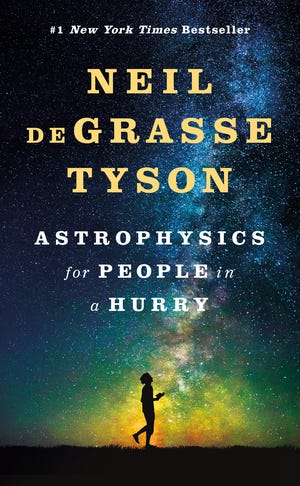
Astrophysics for People in a Hurry by Neil deGrasse Tyson
“When I’m overcome with hopelessness these days, Neil deGrasse Tyson’s reminder in Astrophysics for People in a Hurry that we are all made of stardust fills me with awe and wonder again:
‘Every one of our body’s atoms is traceable to the big bang and to the thermonuclear furnaces within high-mass stars that exploded more than five billion years ago. We are stardust brought to life, then empowered by the universe to figure itself out—and we have only just begun.’”
—Karen, Executive Publicist
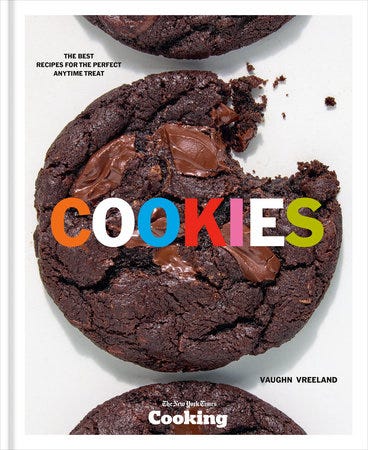
Cookies by Vaughn Vreeland and New York Times Cooking
“They weren’t lying when they said the Salted Butterscotch Chocolate Chunk Cookie is a ‘Cookie to Woo Your Boo’—my boo was most definitely wooed.”
—Lisa, Associate Art Director
As an author published by Simon & Schuster observing the current state of the U.S. publishing industry, it’s as if the marketplace has stalled as it re-engineers its model to account for AI, consolidation, and awful writers self-publishing stank - all while telling aspiring authors that an established platform with an audience is what gets an author a book contract. Is that what was told to Clavell, LeCarre and Leonard?
Having finished my second book, and first fiction novel, a thoughtful approach to hybrid publishing is becoming increasingly attractive.
For new writers, my own experience might be instructive.
When S&S bought my first book and paid an advance, I was giddy. What resulted was an editor who went silent because his coke habit was beating his ass. A hint of hope arrived when he was replaced, until it was evident the new editor brought three steamer trunks of bias and a poor attitude, as if my book was about her sensitivities and opinions.
When it came to marketing, my first book became a DIY project, and I was fortunate (unlike a lot of other authors), to get on The Daily Show and option my first book to AMC Studios. That’s unnecessarily hard and empirically senseless.
All that to say, what makes Random House stand-out in the current publishing industry circumstances, beside its legacy?
They are. Sadly not often do they want to actually spend time and efford in that.